We all know it will happen.
Sooner or later, someone, somewhere, will become fed up with an overly doctrinaire vegan and go on a rant about The Vegan Agenda. Notice how simple italics can make an idea appear more legitimate.
‘Fed up’ is an apt phrase in this context because the angry fabulist will almost certainly be a meat eater.
Wouldn’t it be hilarious if the real vegan agenda was to stop eating animals and simply eat angry carnivores? In theory, of course. I use the phrase ‘fed up’ in a purely figurative sense and doubt anyone, vegan or carnivore, would be harmed in such an exchange.
Vegetarianism and veganism may be ultra-hip now, but the general idea has literally been around for ages. The choice not to eat meat, included in the doctrines of a number of social and religious movements, seems to have been almost exclusively a moral one. Pythagoras, of the triangle, encouraged his followers to show kindness to animals by not eating them as early as 500 BC. Although he may have murdered one of his students over an inconvenient mathematical discovery, so a complicated fellow? Buddhism discourages meat eating, although their quest to control desire and greed means that Buddhists are called to take whatever food is offered to them. In an interesting twist, the bad karma redounds to the person who offers them meat.
The term, ‘vegan,’ was coined by a British woodworker named Donald Watson in 1944. Watson, horrified at the screams of a pig being slaughtered at Christmas, stopped eating meat when he was 13.
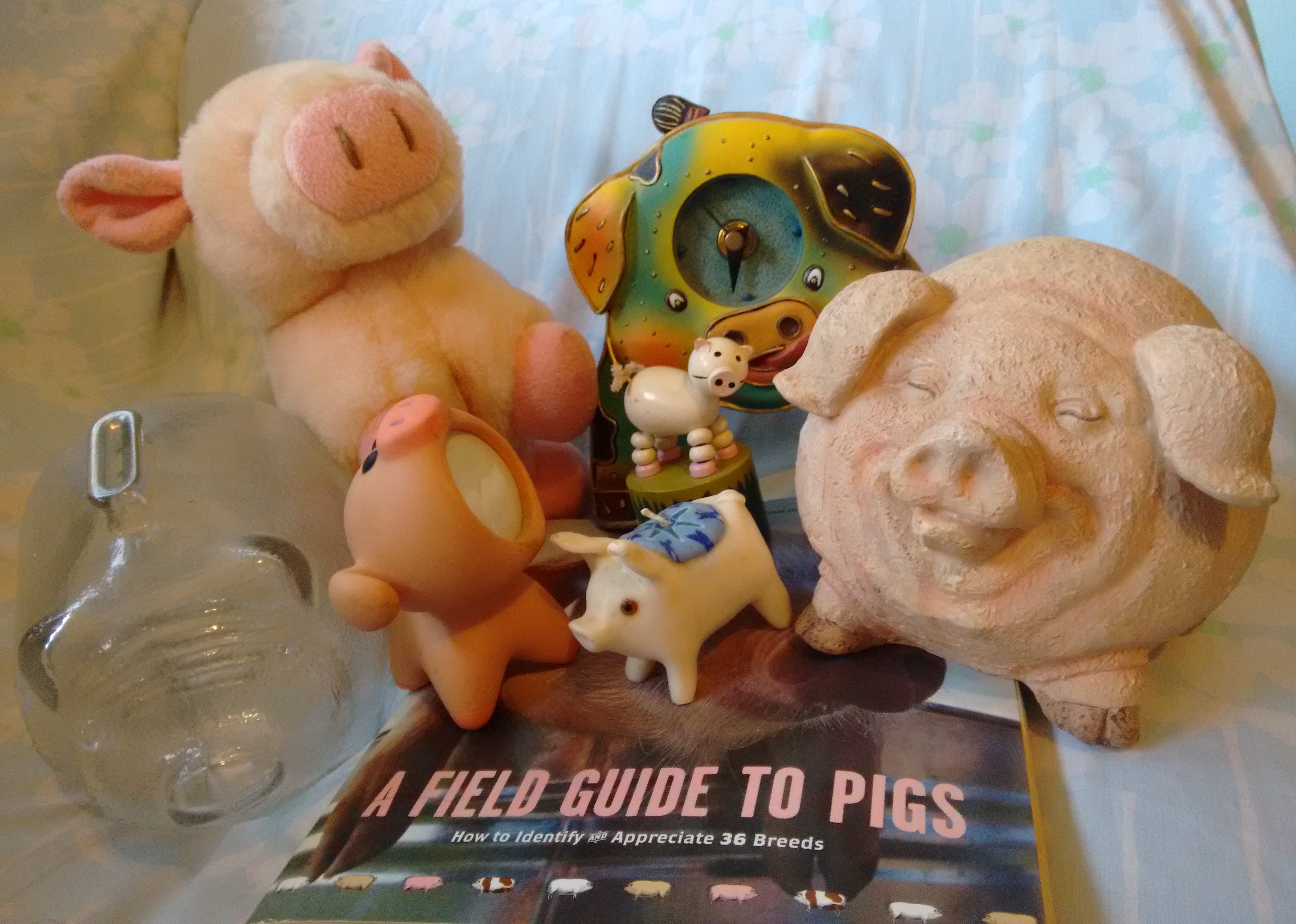
This is totally plausible to me, as my youngest son decided he loved pigs in elementary school and eschewed pork for years.
People also decide to eat less animal products as a way to feel better or get healthier. The added moral benefit of being kind to animals is just lagniappe. Blue Zones, communities that boast great longevity and seem to consume a lot of vegetables, are fun to read about.
And, now, with the reality of climate change, the choice to avoid meat may be the ultimate environmental act.
As more and more people eat less and less meat, it’s time someone made a start on the paperwork.
As yet, I’ve not seen an official draft of this agenda, so I’ve decided to get out in front of it. I’m on Christmas vacation and, since I’m no longer marinating, basting and cooking meat, I have loads of time on my hands.
I am not a vegan but play one about 90% of the time. It may be advantageous to have a person with a foot in both camps draft the initial document. Full disclosure, I initially typed ‘food in both camps.’ And, some of my best friends are meat eaters.
I have made the acquaintance of too many vegetables to count and have reached the point that I now actually almost enjoy tofu.
I believe that one reason so many people claim to hate tofu is that it is invariably served as big cubes. Nothing anyone wants to eat in nature comes in cubes and no amount of wishing will make caramel trees real. A large cube of tofu will never absorb enough flavor to make you forget what you’re eating. Not that eating tofu is a bad thing, but there’s no reason to dwell on it.
The Ancient Asian Tofu Formula, or this one, is all about the proper amount of surface area:
TH ≤ FW = Ü
Thickness is less than or equal to a Finger Width to make your mouth happy
Scramble with seasonings, blend into a smoothie, drop small cubes in soup or coat small pieces in cornstarch and fry until crisp. There is a slow, dry stir fry of triangular tofu pieces with garlic that, after being browned, looks and tastes eerily like sautéed chicken. But this may be sorcery and I hesitate to pass on the details.
There is a slanderous rumor that vegans are superstitious, and fear many things. When I feel myself slipping from simply enjoying vegetables to the dark side where freaky foods reside, I begin to imagine idols carved from blocks of extra firm tofu.
This is when I remember the emergency hamburger. And, get this, a hamburger once, okay twice a year, is not a failure if it’s an emergency plan. It’s a mechanism to get back to normal. Happily, everyone gets to choose their own normal.
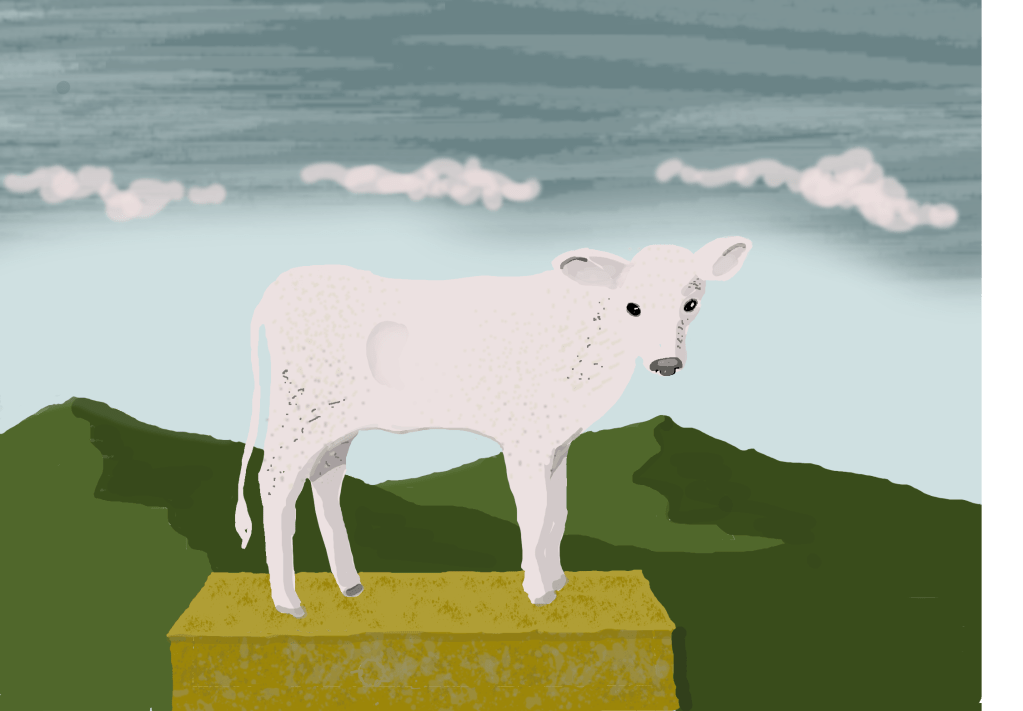
Thus far, when called to serve, it has come. When I had been eating vegan for 7 or 8 months, I fell off the wagon at a great little local place called Foothills Butcher Bar. The small burger was delicious, but I was surprised at how happy I was to return to the vegetable fold. And cows are just so sweet, aren’t they?
My final qualification for this culturally important task is that I know how to cook the old-fashioned way. This means I know what turnip greens are supposed to taste like and will not rest until my vegan greens are delicious. This new good life can be a thing.
As a measure of good faith, I will now share with you the surprising secret of vegan fried chicken gravy. The chicken is not necessary. The fried bits of dough left in the oil after the chicken is taken out provide the flavor. I simply make gravy the traditional way, after frying some vegetable coated in cornstarch or batter, minus the bird. No delicious gravy will ever be healthy.
Now that we’re agreed I’ll crack on, shall I?
As far as fonts go, I lean towards the sans serif. There is something very old world about all of those pointed serifs sticking out into space as if hoping, even accidentally, to spear a passing boar. Futura would be a fine choice, reflecting in style and name a new world view, though it was created in 1927.
But my final choice would have to be clean, forward-looking Optima. The slight tapering and variation in weight on the curves lends this elegant font a much more emotive form. Vegans looks toward the future, don’t they? And sometimes they emote, so Optima it is.
Besides, it is the most beautiful font I know.
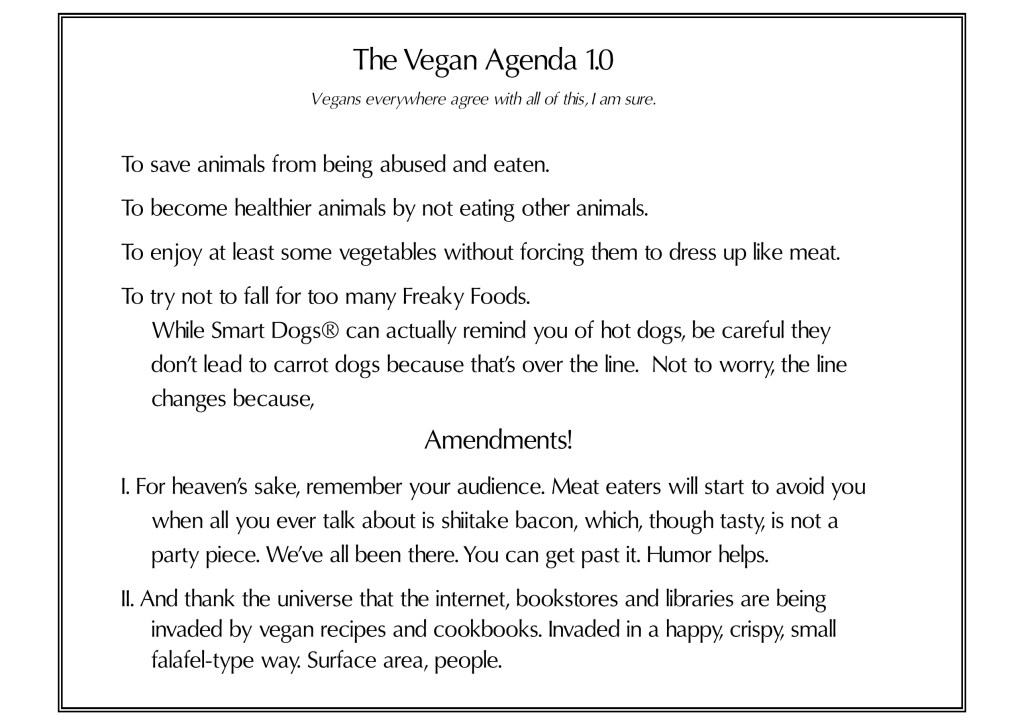
Now, when someone screeches about The Vegan Agenda, they will suddenly be speechless to find that such a thing actually exists. In the silence there is every chance they will realize they haven’t had lunch. That’s you’re cue to bring out the cukes and hummus, because what’s an agenda without implementation?
an essay originally published here, now landing at home
 these fine collapses @ desmonddahm.com